Youth as Experts
Co-creating innovative youth programs. We ran design-thinking workshops where the teenagers were the experts and we were the facilitators, then built the prototype their own ideas asked for.
The problem
A widening gap, and no one asking the kids
Over the last sixty years, the gap in educational achievement between youth from poor families and youth from wealthy families has grown sharply, showing up in test scores, college admissions, and the opportunities a young person even hears about. The learning ecosystem outside school is fragmented, and the people it is built for are rarely in the room when it gets designed.
What needs to happen to increase young people's awareness of and access to learning and cultural opportunities across the Kansas City metro area?
The challenge
You cannot hand teenagers a solution
Few people like having a solution imposed on them, and teens least of all. Any project meant to engage youth has to invite the youth to say what actually matters to them. That put three hard questions in front of us before we could start.
How do we ask questions of youth without imposing our own bias?
How do we recruit young people from a community where trust of outsiders is a real barrier?
Will our recruits actually be able to produce the prototype we need to test?
Our process
Design thinking, done with people and not at them
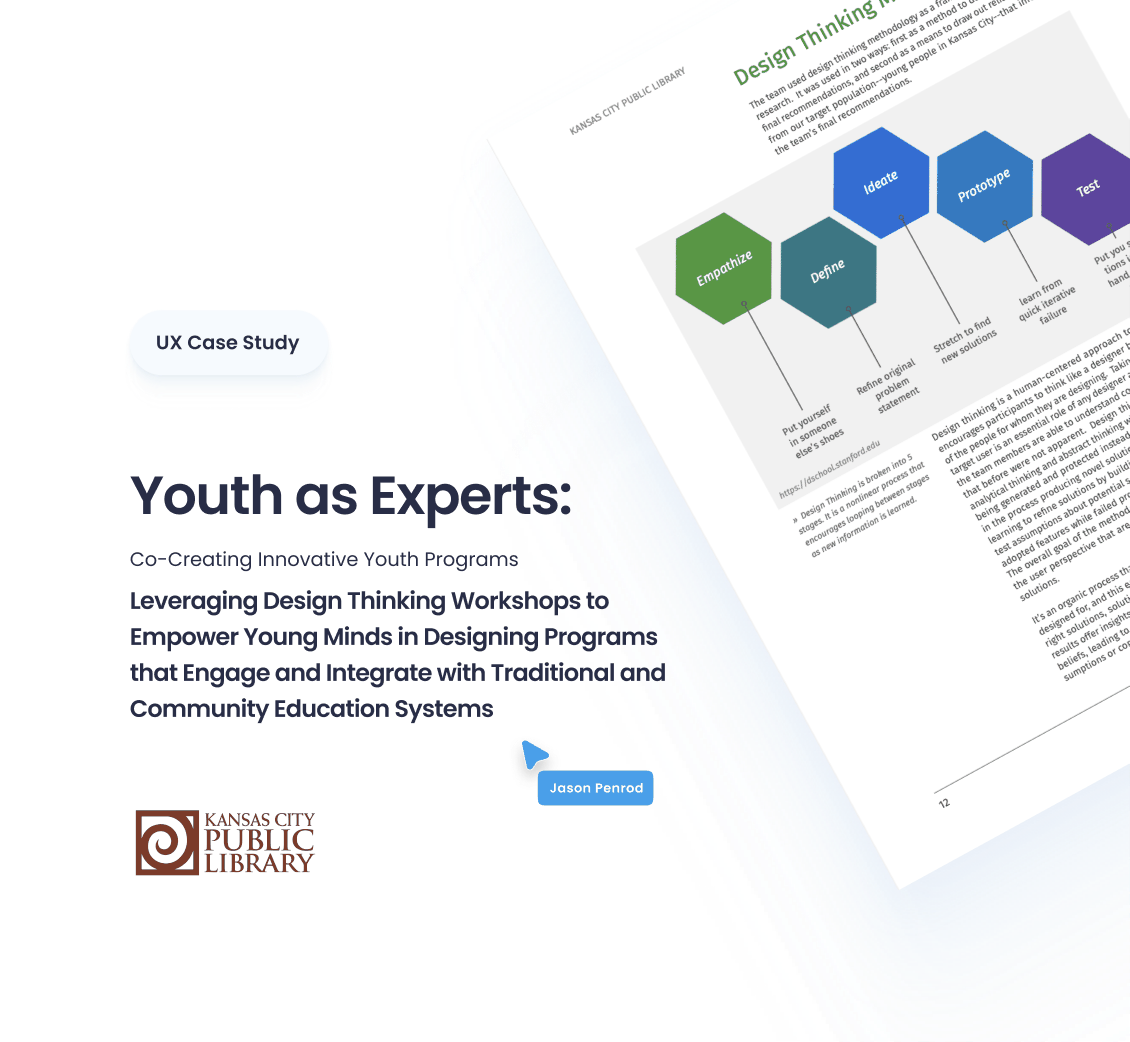
We stayed grounded in human-centered design, the Stanford d.school model, and kept young people in Kansas City at the center of every step.
Meet youth where they are, listen before assuming.
Surface the real barriers to access and awareness.
Frame the problem in the youths' own words.
Run workshops where teens generate the ideas.
Build what their ideas actually asked for.
Put it back in front of the youth who made it.
Who we designed with
Four teenagers, four relationships with opportunity
Our team, researchers, library staff, and summer high-school interns, built personas across the whole spectrum: from the kid who has checked out to the one already making the most of everything on offer.
Disconnected Doug
Barely aware of what is out there, and not yet looking for it.
Unmotivated Malik
Knows opportunities exist, but has no reason yet to act on them.
Connected Chloe
Plugged in and active, and a bridge to the friends who are not.
Capitalized Clara
Already making the most of every program she can find.
Emerald, 16, wanted a way into film and journalism. She could not find one.
The workshops · phase one
We taught design thinking with a peanut butter sandwich
Before anyone designed a program, they learned the method by building the perfect PB&J. It is disarming, it is funny, and it teaches the whole loop in twenty minutes.
Draw the "perfect" peanut butter and jelly sandwich, with no inspiration and no help.
Facilitators reveal a table full of amazing ingredients nobody knew was there.
Interview a partner about the new ingredients they would actually want.
Build sandwiches for each other, then leave feedback for the designer. Iteration encouraged.
The workshops · phase two
Then the youth designed for real
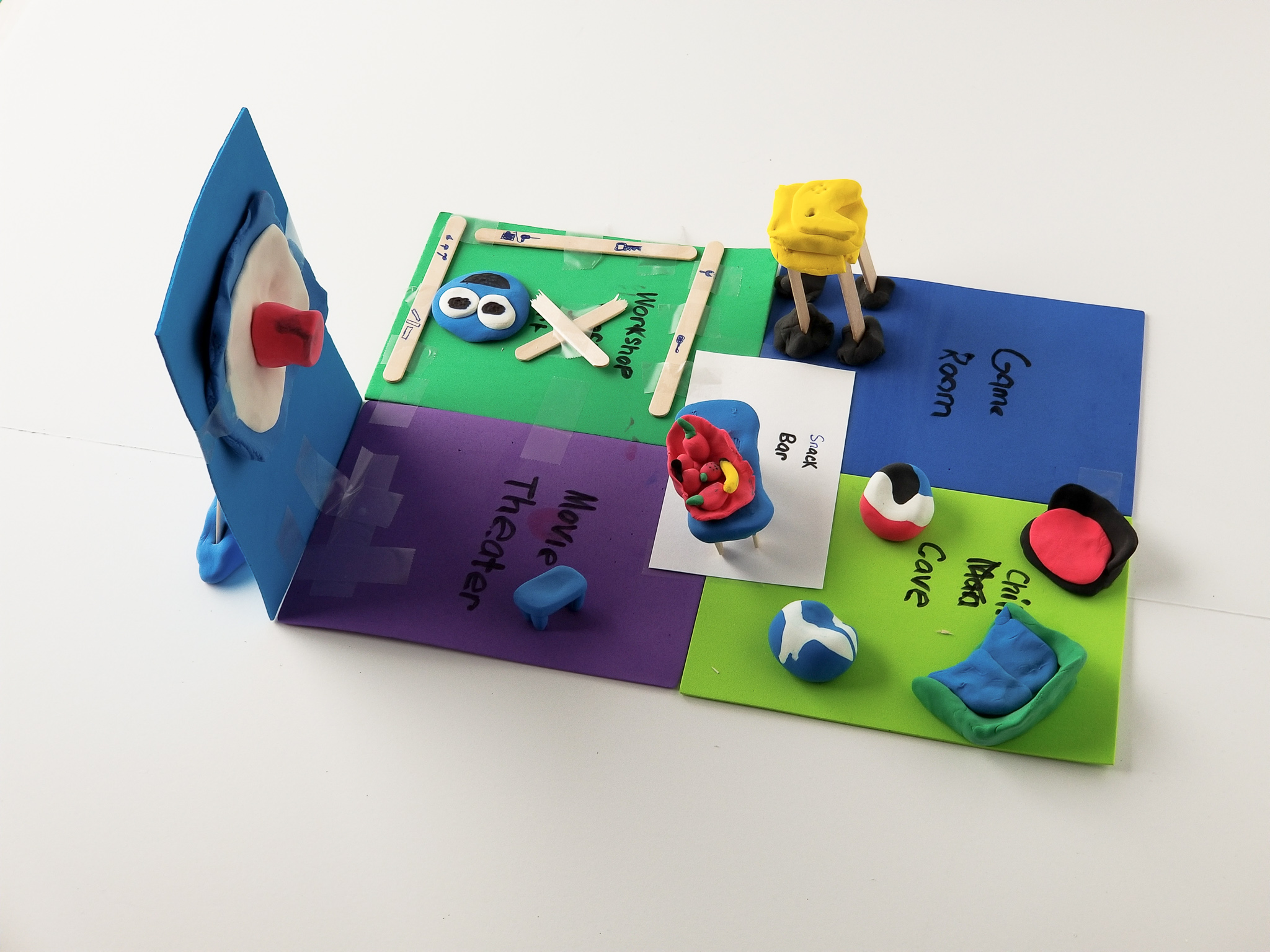
With the method in hand, teens designed the spaces and programs they actually wanted. Three of their ideas stuck.
The Ultimate Hangout
Quiet spaces and group spaces in one place, so every kind of activity has a home.
Gamer Space
"We don't just want to play games, we want to make games."
Binge Watch
A comfortable place to connect with friends while catching up on the current series.
What we heard
Thirty-two conversations, four clear patterns
KC metro · 2018
Mobility was the constant barrier. Few had a car, parents were busy, and the bus felt neither safe nor reliable to most.
Teens were eager to chase their passions but simply did not know the opportunities that already existed.
Doing something with friends made a teen far more willing to try a new learning opportunity.
Teens were most comfortable trying new things that a trusted adult had recommended to them.
Telemetry tells you where people drop. Talking to people tells you why.
The solution
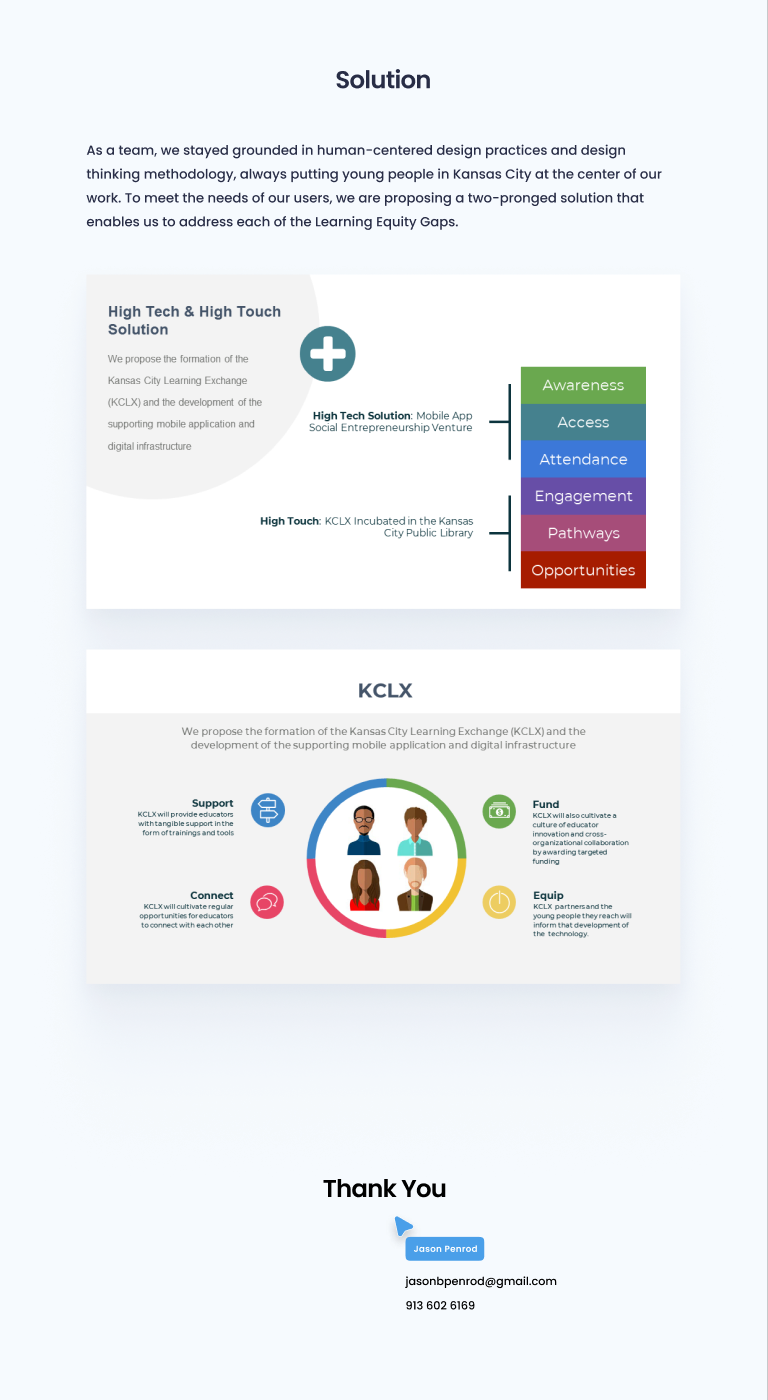
Two products, one loop: educators publish, youth discover
The prototype split into two connected products, so the people who run programs and the young people who need them were finally on the same system.
Use the design-thinking method inside the communities actually affected.
Let the community youth voice guide and build the prototype.
Lean on behavioral-economics best practices to make good use a habit.
Make it personal: a custom profile, favorites, and points worth collecting.
Author an event once, share it everywhere
A guided authoring tool for community and traditional educators, with expert advice built in and a shared community calendar. Write an event once and publish it out to every channel the youth actually watch.
- Guided new-event authoring
- Expert advice, inline
- Shared community calendar
- Publish once to many social networks
Find it, get there, keep track
A phone app for young people to discover, share, and track local learning events: a social profile with community badges and a points system, personal stats, and the feature the research demanded most.
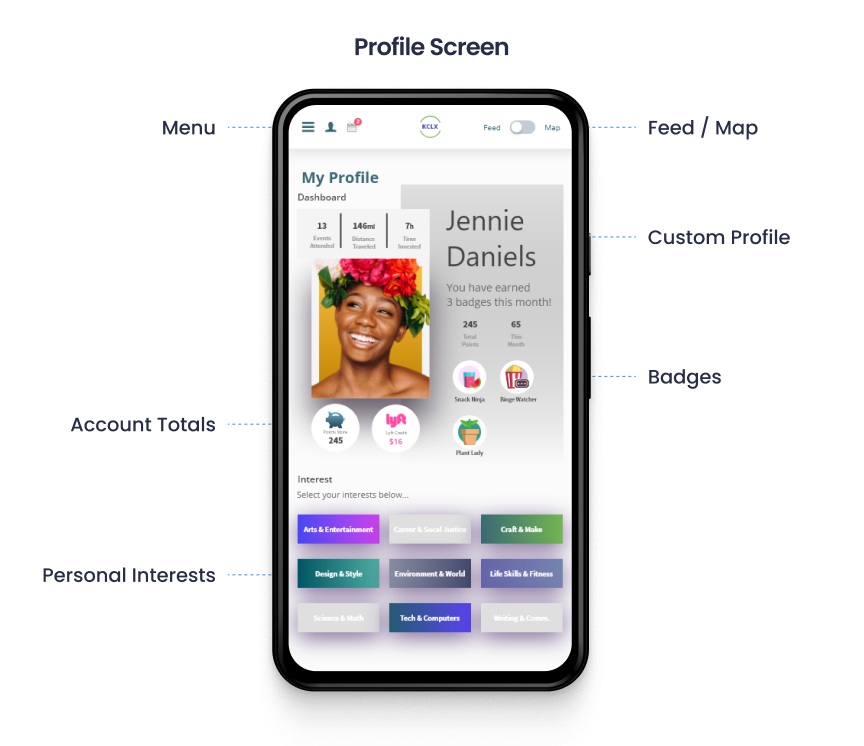
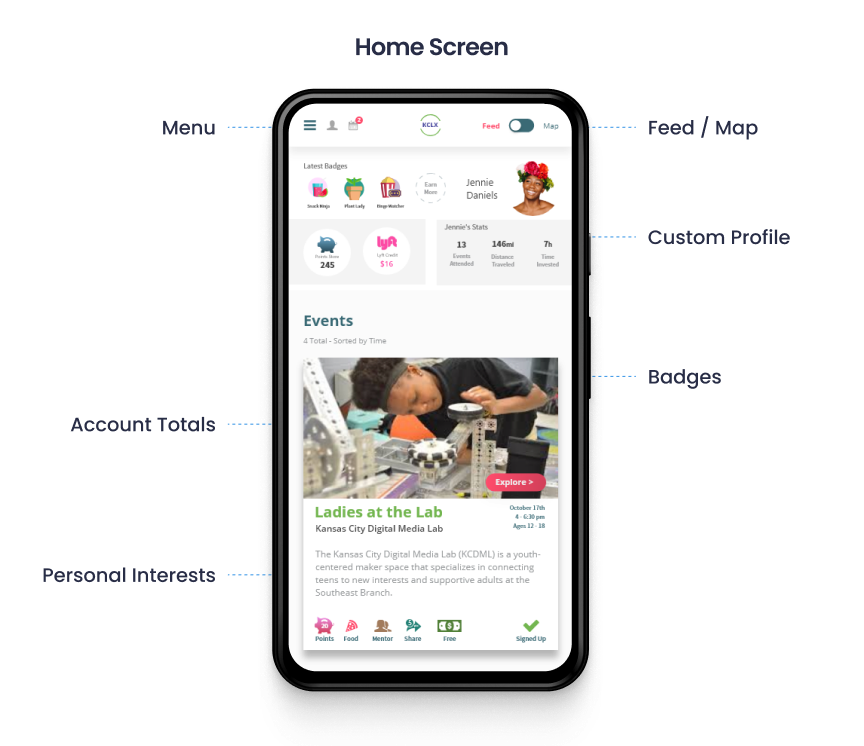
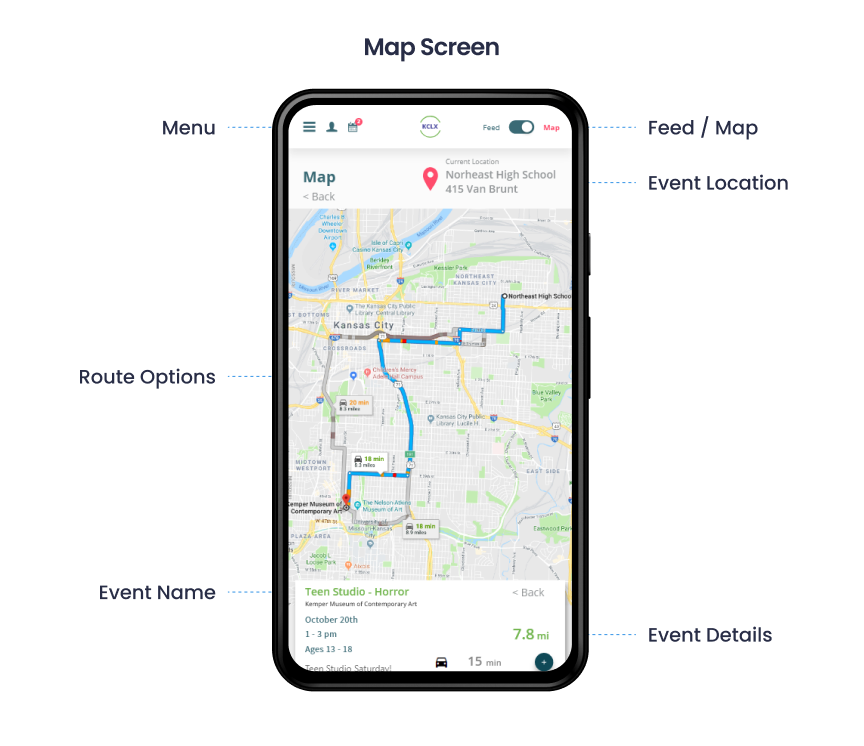
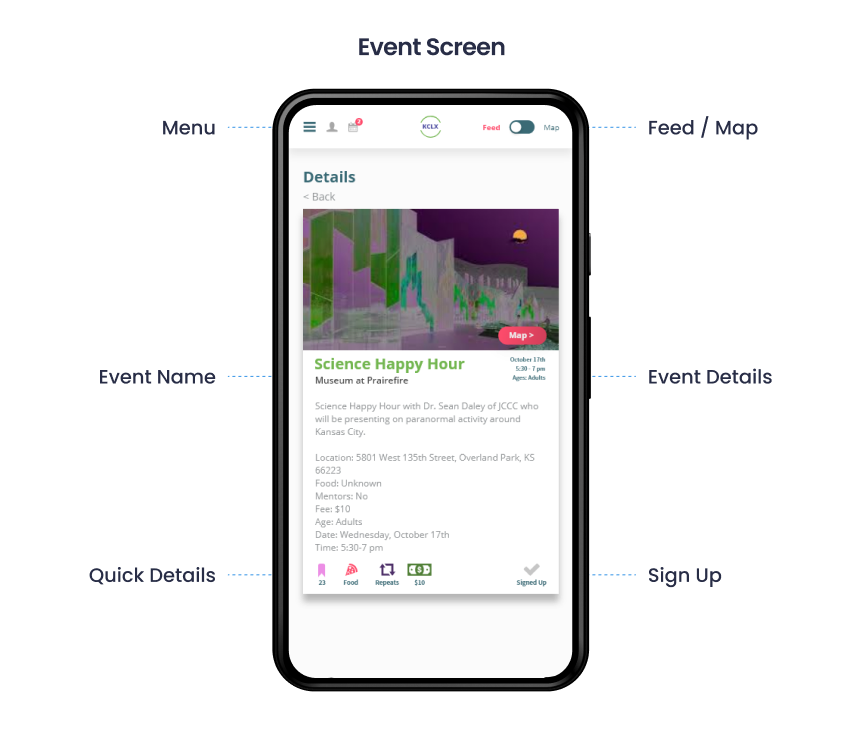
Transportation was the number-one barrier we heard. So the app carries a rideshare balance and shows transit options and distance on every event. The insight became a feature.
This is how I run discovery
If you have a problem where the people it is for are not yet in the room, this is the work. Tell me what you are building.
Start the conversation